


79
/ 100
SEO score
A digital marketing strategy is essential to reach the desired goal for the product or service on the internet and social networks for its promotion.
Success begins with a good plan, which in turn starts with research to understand which solutions could offer the best results for the challenges.
To define the objectives and get the most suitable solution, you need to take the following answers: the who, what, where, why and when of digital marketing.
Social content
To succeed in marketing you have to rely on the ability to deliver the content to the audience you want, when they want it.
Finding out these two components can be a challenge. Run empirical tests to optimize the result, such as testing with different target audiences for a certain time and then drawing conclusions and behaviour patterns from the popular content.
Articles should be:
- The headline must grab attention:The only goal of a post’s title is to make whoever sees it want to read the first paragraph.
- Structure your post:It is essential that your articles are as simple as possible, structured in short paragraphs that are not intimidating.
- Use lists:It may seem silly, but lists work. They let you structure a post’s ideas in a clear and orderly way, and they make it very easy to read.
- Images: They must be striking and illustrative, supporting the content at all times. It is advisable to include a standout image at the start of the post to attract the user’s attention
- Videos:They can be well liked on Facebook, and Twitter competes for engagement in this format.
Trend Report marketing
Using Google Trends to track searches for marketing keywords at regional and global level is essential to know how users behave and to be able to build a suitable strategy.
Online Marketing growth strategies
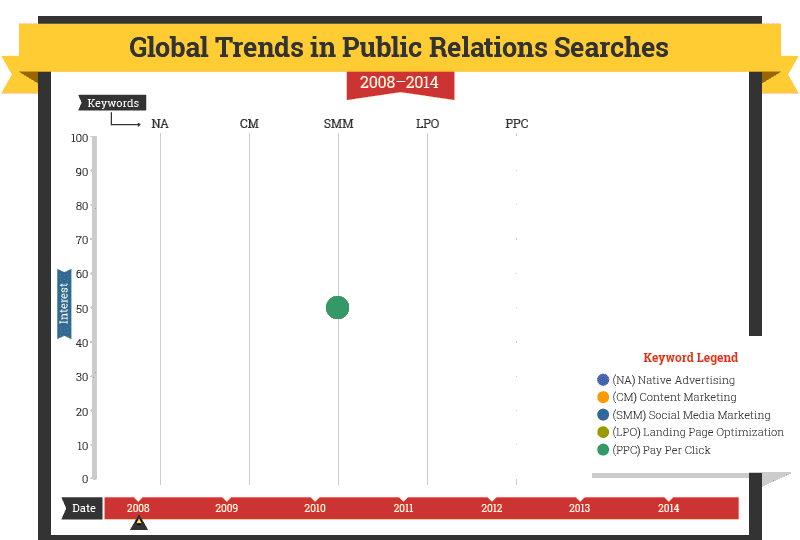
- Native advertising: A late bloomer of the group, native advertising did not gain its first spot on the marketing industry’s radar until March 2011 and did not gain traction until November of the same year. Since then the term has earned a mostly positive place, peaking in August 2014 when it briefly surpassed the traffic volume of pay-per-click.
- Content Marketing: Pay-per-click gained nine times more search interest than content marketing in January 2008, but by the end of 2014 the roles were reversed: content marketing now leads with three times the traffic. The switch took place in November 2012 and the gap has widened continuously since then.
- Social Media Marketing: Searches for social media marketing started in 2007, the same year Microsoft announced its investment in Facebook. But 2009 marked the beginning of a two-year, 80% rise in interest that has kept the tactic near the top of marketing searches. Searches have fluctuated by 20-30% over the last three years, with the highest point in April 2014.
- Landing page: The most turbulent of the trends in the marketing strategy category, landing page optimization got its initial gain and greatest interest between May and June 2008. The last seven years have been very inconsistent for this tactic, with searches rising and falling by up to 55% in a single month. This lack of stability is a sign that the industry has not yet adopted landing page optimization as a staple marketing approach.
- Pay-Per-Click: The preferred approach at the start of 2008, searches for “pay per click” phrases have fallen 68% in the last seven years. The acronym PPC gets more search traffic in volume, an indication of the industry’s embrace of this approach, yet searches for this abbreviation have also fallen 84% over the same period.
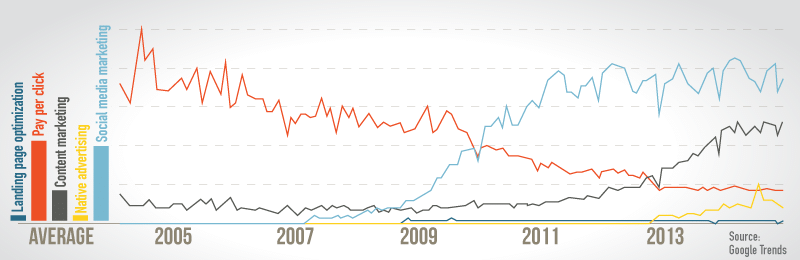
In this chart you can see the long-term results of the trend of the 5 forms of online marketing strategy.
Influencer marketing on Twitter
After learning the marketing tools and tactics, we turn to Twitter to find out what influencers are saying about the industry. They can be recognized by keywords, hashtags…
After getting the key content on Twitter, use services such as:Peer Index, Twitonomyto discover the types of tweets, sentiment, and key influence in the discussion.
Marketing conversation
Once you have found which people influence the topic, product, service, industry…, you need to analyse what they preach when it comes to added-value content.
Influencers
Once we have analysed the influencers and know what type of content they highlight or share.
What you have to do is create content that follows the same line so that it is attractive enough to influencers. If you manage it, they will promote it almost naturally, so that your content reaches a larger number of users within Twitter and makes a successful promotion of the product or service at a low investment cost.
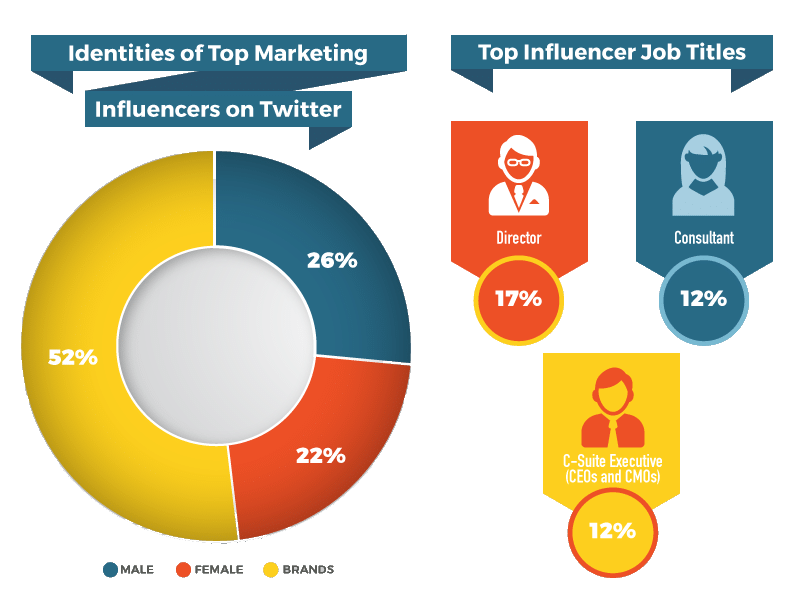
Overall, of the percentage of influencers, at least 41% are in leadership or consulting positions: directors, general managers, marketing directors and consultants dominated the list, followed by people who write on blogs and media.
Engagement on Twitter
Finally, a study on Twitter engagement of 1.94 million tweets revealed that social authority can have a big influence on how to gain followers.
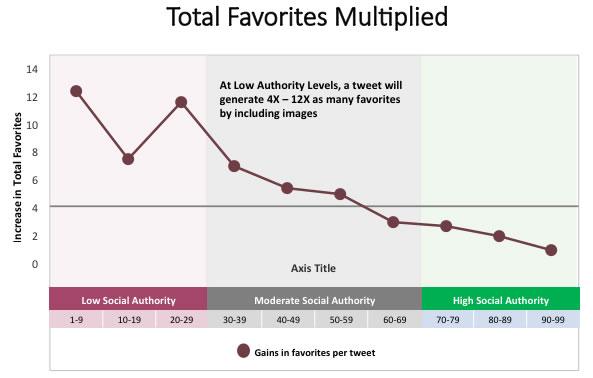
The highlight is that at the lowest levels of authority, including photos and graphics can earn up to 12 times more favourites than tweets without images. Likewise, low-authority accounts also earn the most RTs for the images they use, up to 9x.
In terms of favourites and RTs, engagement drops sharply for Twitter accounts in the moderate social authority range, and drops even lower for those with the highest authority.
Considering that social authority can affect marketing strategy, it is suggested that some tactics may harm follower engagement depending on the brand’s authority position.