
79
/ 100
SEO score
Before we start selling, we need to know how we are going to do it. For that we need an eCommerce online marketing strategy. The best way is to define the annual Communication Plan, which brings together actions with short and medium-term goals and splits the investment in a balanced way according to the effort and measurable impact for the business.
It is important to know that a strategy without an action plan is a hallucination, but an action plan without a strategy is suicide.
Next, let’s look at three steps to define the communication plan.
1) Define the business value proposition of your eCommerce
It seems obvious, but this point is very important to start with the Business Plan where we analyze the offer (competition) and the demand (customers), as well as internal strengths and weaknesses, and the target market positioning is established.
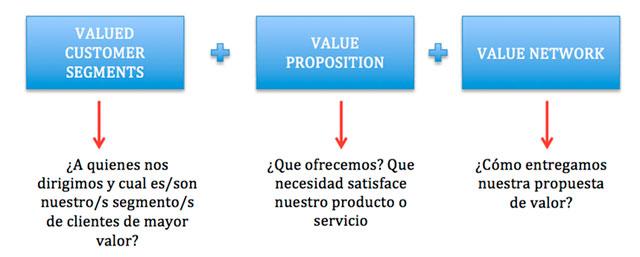
With all this as a base, we define our digital marketing strategy for eCommerce by setting what is known as the 3 V’s of Internet Marketing:
2) Set the media mix
Depending on your sector or market, the maturity stage of the eCommerce and the type of product or service you offer, our eCommerce online marketing strategy will be built around the media mix we need to manage, and the weight and role each of our digital assets will have in successive Communication Plans.
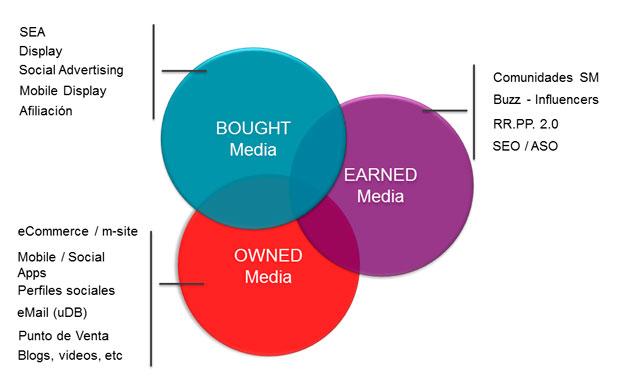
A good online marketing strategy for eCommerce should aim for an investment model with controlled dependency . In other words, our main goal is to gradually shift the share of paid traffic to organic traffic and owned media (SEO, social networks, newsletters, branded content, etc.)
3) Design the Communication Plan
This part of our online marketing strategy for eCommerce focuses on how to acquire and retain your customers.

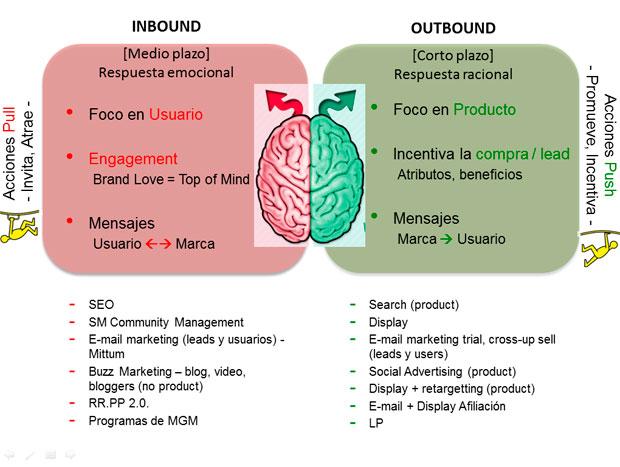
When designing our communication plan, it is important to take into account the Customer Journey and the criteria that drive the purchase decision, to make sure we are present in the different stages of the users’ buying process while also answering all their needs and the key aspects of their decision-making, such as:
- Emotional: (sense of belonging to the brand, customer service, closeness and accessibility), which we address with Pull or user-centered messages, that is, Inbound Marketing , which seeks to generate engagement and brand affinity with conversion to sales in the medium term.
- Rational (product benefits, value for money, alternative offers), with Push or product messages, that is, Outbound Marketing. They focus on achieving conversion to sales in the short term.
Once the Communication Plan for your eCommerce is defined, you can carry out different strategies such as:
Cross-selling
Cross-selling is one of the strategies most used by Amazon to grow the online shopping cart. If you have noticed, you will have seen the message “Customers who bought this product also bought…”which links the product you are about to buy with other closely related ones that can be bought on impulse together with the item of interest.
Psychological strategies
This strategy is designed to create a sense of scarcity for a product. It can be done in different ways, such as adding last-minute offers, showing low stock in certain stores or offers limited to a specific hour. These actions create a sense of scarcity and encourage possible purchases. Other actions focus on “immediate” or almost immediate delivery, favoring the feeling of having the item soon.
Customer interaction and loyalty before they leave
This strategy refers to the actions we receive as customers to encourage us to stay online, or the messages sent by online customer service assistants to give the feeling of being treated individually in an online environment.
Remarketing and retargeting after leaving the eCommerce
For me it is one of the most remarkable strategies. The main goal is to try to win back the user after their visit. For example, the ads that “coincidentally” appear in banners on different websites after visiting an e-commerce site, or receiving an email from an e-commerce store after abandoning the purchase process in the final steps.
Up-selling
Up-selling is one of the most used techniques in eCommerce. These are actions in which, when a customer is looking at a product, a higher-range product is offered on the selected item’s page. The goal is to guide the customer, offer alternatives and try to get the customer’s shopping cart to increase in value.